Statewide pay Government data
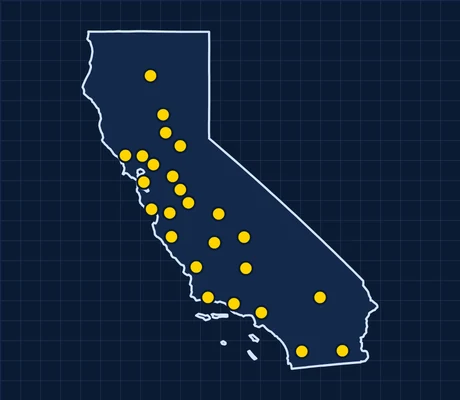
Elevator installers in California earn a statewide median of $141,180 a year, 30% above the typical U.S. metro, ranking #3 of 36 states and DC. About 1,910 people work in the trade statewide.
Statewide pay range
States ranked near California
See all states on the elevator installer overview.
Pay by city Government data
BLS publishes elevator installer pay for 5 California metros: Fresno, Los Angeles, San Diego, San Francisco and San Jose.
| Metro | Median pay | Real pay | Jobs |
|---|---|---|---|
| San JoseCALIFORNIA · CA | $173,920 | $157,503 | 70 |
| San FranciscoCALIFORNIA · CA | $168,270 | $145,546 | 370 |
| Los AngelesCALIFORNIA · CA | $140,600 | $123,805 | 850 |
| San DiegoCALIFORNIA · CA | $140,250 | $125,350 | 170 |
| FresnoCALIFORNIA · CA | $126,110 | $123,446 | 50 |
Pay: BLS OEWS, May 2025 (metro-level). Real pay: BEA price parities, 2024. How we calculate
The job (national)
Assemble, install, repair, or maintain electric or hydraulic freight or passenger elevators, escalators, or dumbwaiters.
Nationally, jobs are projected to grow 5.7% from 2025 to 2035, with about 1,900 openings a year. Typical training: apprenticeship.
Nationally, elevator installers have 101 injuries or illnesses serious enough to miss work per 10,000 full-time workers, 1.2× the rate for all jobs (87). The most common cause is being struck by or caught in objects and equipment.
What the work is like Government data
How often elevator installers deal with each condition, from surveys of workers in the job.
Getting started usually takes medium preparation (vocational training or an apprenticeship, often 1–2+ years).
O*NET 31.0 Work Context and Job Zones (U.S. Department of Labor), national.
Getting started: registered apprenticeship Government data
Most elevator installers train through a paid apprenticeship: you work and earn under experienced pros while taking classes, and pay usually rises as you progress. 727,586 people were active registered apprentices nationwide in FY2026, up 87% since FY2016, and construction is the largest field with 290,043 of them (40%), according to the U.S. Department of Labor.
Search apprenticeship openings ↗Find training programs & sponsors ↗
Official U.S. Department of Labor tools at Apprenticeship.gov. Counts: DOL Apprentices by State dashboard, FY2026 (all occupations).
Registered apprenticeships Government data
Of elevator installer apprentices in California who finished or left a registered program in fiscal years 2020–2024, 77% completed (U.S.: 69%), about 239 graduates a year. The typical program runs 8,000 hours, about 4 years of full-time work. Search open registered programs near you on the official Apprenticeship Finder.
U.S. Department of Labor, RAPIDS apprentice records (Completion Rate Analysis), FY2020–2024 exits.
Licensed contractors Government data
California had 188 active C-11 Elevator contractor licenses in October 2026. A California contractor license is required to bid jobs of $1,000 or more in labor and materials; working as an employee doesn't need one.
California Contractors State License Board, License Master file, October 2026 (active licenses only).
Serious injuries & deaths reported to OSHA Government data
California runs its own workplace-safety program (an OSHA State Plan), so its injury reports aren't in the federal dataset. Nationally, in states federal OSHA covers, building equipment contractors filed 291 severe injury reports from 2015 to 2024; the most common cause was contact with objects and equipment (51%).
OSHA Severe Injury Reports, January 2015–December 2024 (states under federal OSHA only).
Fatality investigations: OSHA Fatality Inspection Data, events 2015–2024, all states.
Licensing in California Official source
The main state licensing office in California is the Contractors State License Board. Licenses all trades by classification (e.g. C-10 electrical; C-36 plumbing). It can point you to the right license for elevator installers.
Official California licensing site ↗
Requirements for elevator installers vary by state and sometimes by city; always confirm with the official agency.
Union membership
In 2025, 14.9% of wage and salary workers in California were union members, above the U.S. rate of about 10% (#8 of 51 states and D.C.), and 16.7% were covered by a union contract. These figures cover all jobs in the state, not only elevator installers.
BLS Union Members, 2025 (Current Population Survey), table 5.
Cities in California
All trades in California.